Delivering ESG on Urban Sites: Why Nature, People and Long-Term Management Matter
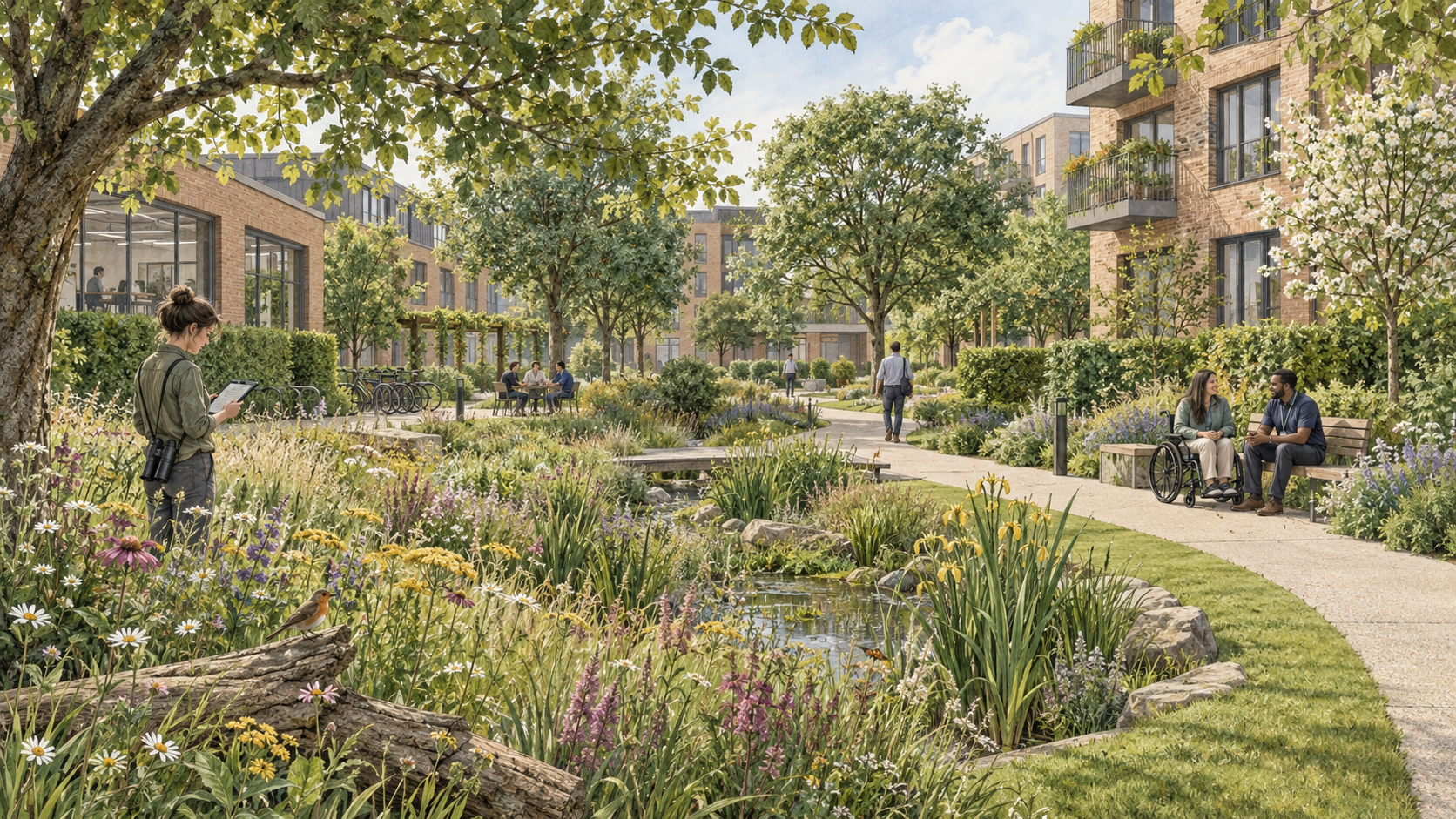
An office courtyard, a school boundary, a residential estate or the grounds surrounding a warehouse may seem like small pieces of the urban landscape. Together, these spaces offer significant opportunities to support wildlife, improve people’s experience of a place and demonstrate responsible land management.
For organisations working towards Environmental, Social and Governance (ESG) objectives, their own sites provide a practical place to begin. Decisions about planting, grounds maintenance, access and habitat management can turn broad commitments into visible actions with measurable results.
At Bee.Wise.Eco, our focus is on the ecological and biodiversity aspects of this work—and how they connect with people and accountable management.
Why is ESG delivery so important in urban areas?
Urban sites face competing demands. Buildings, roads, parking and services occupy space, while remaining green areas must accommodate wildlife, recreation, access and everyday operations.
Well-planned green infrastructure can help address several pressures at once. Trees and vegetation can provide shade and cooling, while suitable planted areas can help slow surface-water runoff. Connected habitats also give wildlife opportunities to move through otherwise fragmented urban landscapes. These functions are recognised in Natural England’s Green Infrastructure Principles.
The quality of these spaces matters as much as their presence. A neglected planting bed, inaccessible garden or failing tree scheme may deliver little of its intended value. Successful delivery depends on understanding the site, choosing appropriate interventions and maintaining them over time.
This makes ESG relevant to existing estates as well as new developments, across commercial, residential, education, healthcare, industrial and community settings.
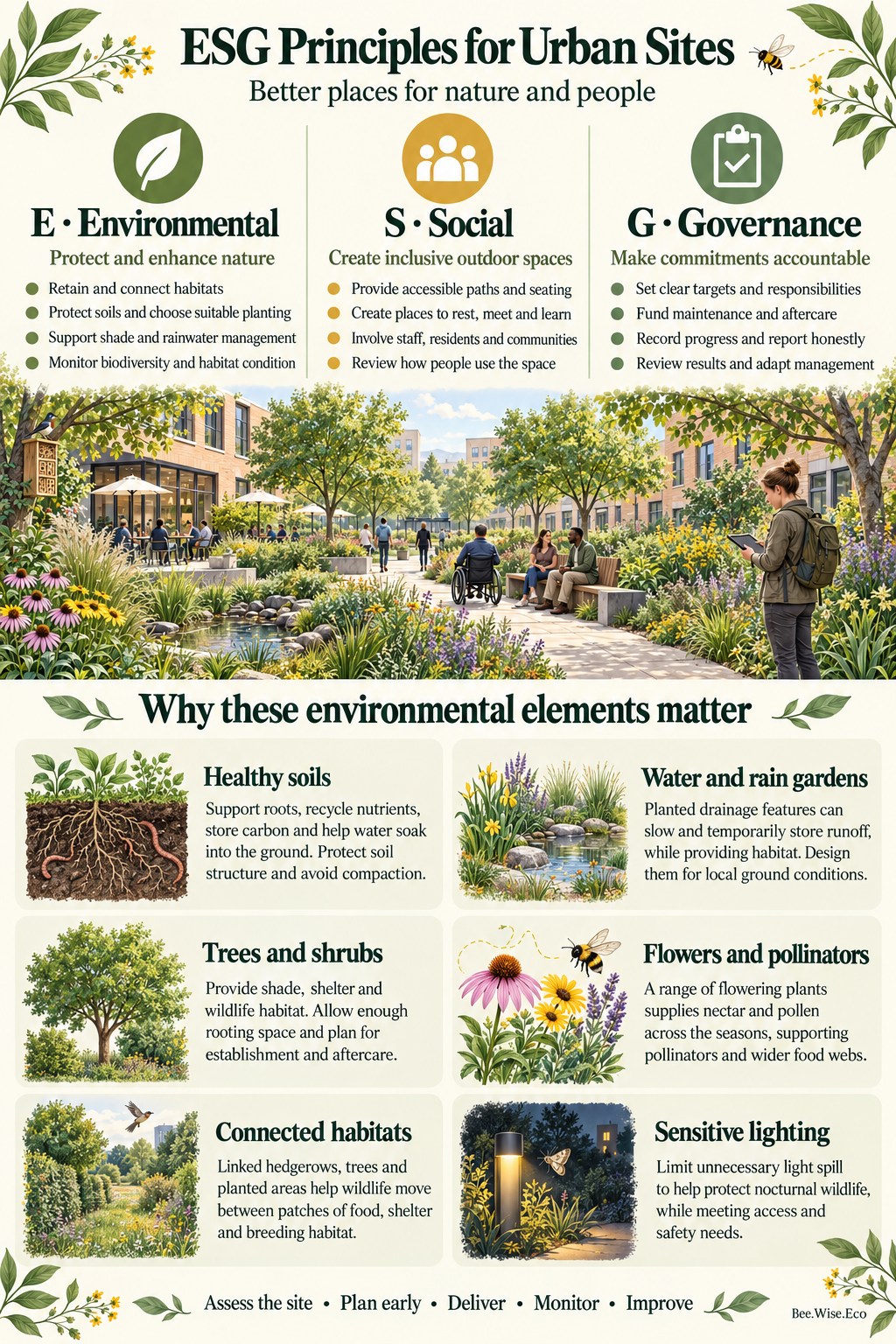
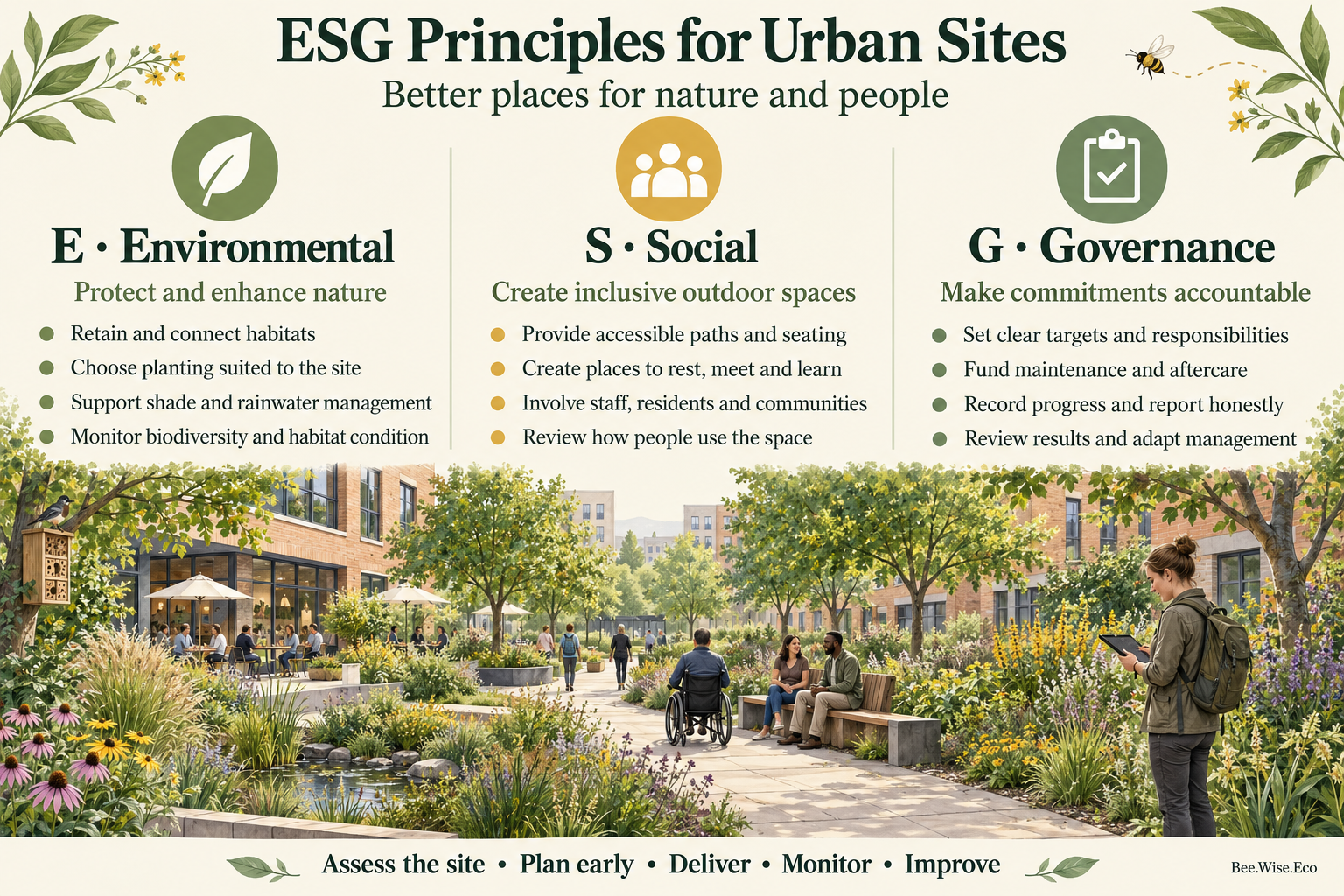
Environmental: protect what is valuable and improve what is missing
The first step is to understand the site’s existing ecological value. Even small urban spaces may contain established trees, nesting opportunities, flowering plants or features that connect with nearby habitats.
A baseline assessment helps identify what should be retained, where management could improve and which areas offer realistic opportunities for enhancement. Where appropriate, Local Environmental Records Centre (LERC) data adds information about species and habitats in the surrounding area.
Practical actions could include:
Retaining and protecting established habitats.
Improving hedgerows and connections between planted areas.
Introducing suitable flowering plants to provide seasonal resources for pollinators.
Changing mowing regimes in selected areas while maintaining access and visibility.
Choosing planting suited to soil, light, moisture and available growing space.
Reviewing lighting where it may affect sensitive wildlife.
Each action should have a clear purpose. A bird box needs an appropriate location; flowering grassland needs suitable conditions and management; newly planted trees need sufficient rooting space and aftercare.
Social: create spaces people can use and enjoy
Urban green spaces can provide places to pause, meet, learn and spend time outdoors. Government planning guidance recognises their role in supporting recreation, social interaction and opportunities to experience and care for nature. Read the guidance on green infrastructure.
For an individual site, the starting point is understanding its users. Employees may need a comfortable outdoor break area. Residents may value accessible seating and shared planting. Schools may want spaces for outdoor learning, while community facilities may benefit from opportunities for volunteering.
Useful questions include:
Can people reach and move through the space comfortably?
Are there places to sit, with appropriate shade and shelter?
Does planting preserve necessary visibility and access?
Have users been involved in identifying priorities?
Can people understand why some areas are managed differently?
A flowering verge may be welcomed more readily when a clear edge and simple sign show that it is being actively managed for wildlife. Thoughtful communication helps people recognise the purpose of change.
Governance: make sure commitments survive beyond installation
Governance gives a project continuity. It establishes who makes decisions, who carries out the work, how it is funded and how progress will be reviewed.
For urban sites, this means agreeing responsibilities between owners, occupiers, facilities teams and grounds-maintenance contractors. A biodiversity action plan is only useful if the people managing the site can put it into practice.
A practical delivery plan should identify:
The baseline and intended outcomes.
Actions, locations and timescales.
Responsible people or teams.
Establishment and ongoing maintenance requirements.
Monitoring methods and review dates.
How problems will be recorded and addressed.
For example, a meadow proposal needs more than a seed mix. It needs an agreed cutting regime, arrangements for removing cuttings, a suitable contractor brief and a way to assess whether the intended vegetation is establishing.
Working with the challenges of urban sites
Space, budgets and operational requirements can limit what is possible. Compacted soil, underground services, heavy footfall, shade and drought can also affect success.
These constraints should shape the proposals from the beginning. A small, well-managed enhancement may be more appropriate than a larger scheme without the resources to maintain it.
Consider a workplace with extensive short-mown grass and a little-used courtyard. An initial assessment could identify which grass areas are needed for recreation or access and which could support more varied vegetation. Consultation could reveal a need for seating and shade. A phased plan could then link habitat improvements with practical changes for staff, supported by clear maintenance instructions.
This is an illustrative approach: the measures and expected benefits would depend on the actual site.
Measure outcomes as well as activity
Recording what has been installed is useful, but it is only the beginning.
The number of trees planted does not tell us how many survive. The area sown does not confirm that the intended habitat has developed. Providing an outdoor space does not establish whether people use it.
Depending on the project, monitoring could record plant survival, habitat condition, flowering resources, completion of management actions and feedback from site users. Findings should guide the next management decision and support accurate reporting.
Where BNG commitments apply, their specific monitoring requirements should be addressed alongside wider ESG objectives.
Start early and build lasting value
Early ecological input allows organisations to understand constraints, arrange seasonal surveys where necessary and incorporate improvements before plans and budgets are fixed.
For existing sites, a baseline review can help prioritise achievable actions and establish a programme of gradual improvement.
BWE supports this process through ecological assessments, biodiversity action planning, habitat management advice and monitoring. We help organisations identify what their sites can contribute and gather evidence of progress.
Your urban site can be part of a wider network of spaces supporting nature and people. Contact Bee.Wise.Eco to explore its potential and develop a practical plan for delivery.