Biosecurity Requirements with BNG, Landscaping and Planning Conditions
In recent years, increasing attention has been given to biosecurity within landscape design, Biodiversity Net Gain (BNG), and ecological mitigation projects. As the UK seeks to restore nature, improve biodiversity, and create more resilient habitats, it is equally important to ensure that the plants used to deliver these enhancements do not inadvertently introduce new pests, diseases, or invasive organisms.
The movement of plant material across international borders has been identified as one of the primary pathways for the introduction of harmful pests and pathogens. Several significant outbreaks affecting the UK’s trees and habitats have been linked to imported nursery stock, highlighting the need for robust plant procurement and biosecurity measures.
Why Biosecurity Matters
Healthy habitats rely on healthy plants. Whether delivering a Biodiversity Net Gain scheme, implementing a landscape strategy, or discharging planning conditions, the long-term success of planting schemes depends on sourcing high-quality, disease-free stock.
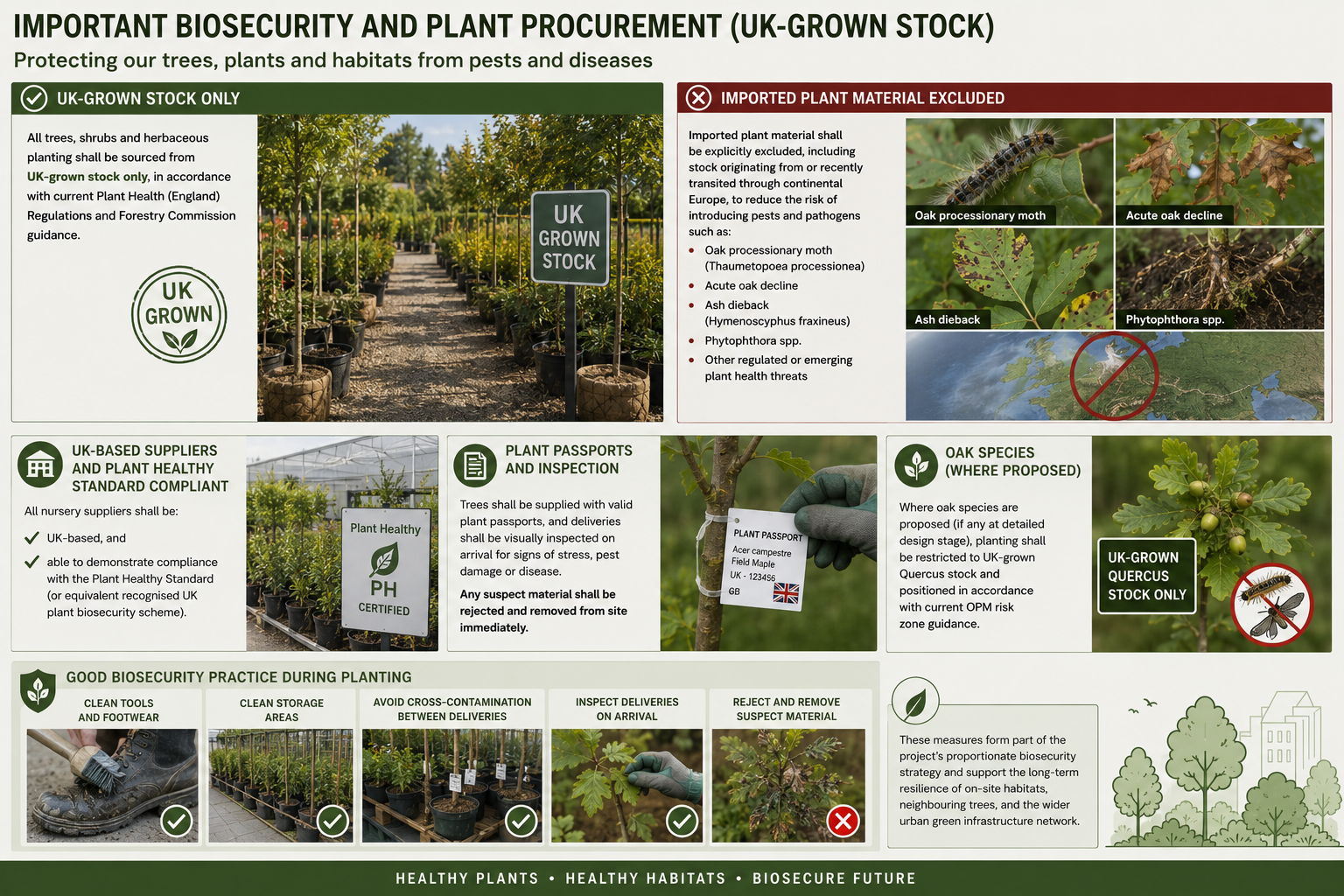
Over the past two decades, the UK has experienced a growing number of plant health challenges, including:
Ash Dieback (Hymenoscyphus fraxineus)
Oak Processionary Moth (Thaumetopoea processionea)
Acute Oak Decline
Various Phytophthora pathogens affecting trees and shrubs
Other emerging pests and diseases linked to international plant movements
These threats have caused significant ecological, economic and landscape impacts, affecting both urban and rural environments.
Biodiversity Net Gain and Biosecurity
Biodiversity Net Gain is designed to leave habitats in a measurably better state than before development. However, biodiversity gains can be quickly undermined if newly created habitats become affected by pests or diseases introduced through poorly sourced planting stock.
As a result, biosecurity is increasingly becoming an important consideration when preparing:
Biodiversity Net Gain assessments;
Habitat Management and Monitoring Plans (HMMPs);
Landscape and Ecological Management Plans (LEMPs);
Soft landscaping schemes;
Biodiversity Enhancement Plans;
Urban Greening Factor (UGF) strategies; and
Planning condition discharge submissions.
Many local planning authorities are now encouraging, and in some cases expecting, evidence that planting proposals have considered plant health and biosecurity principles.
The Importance of UK-Grown Stock
One of the most effective ways to reduce biosecurity risks is through the use of UK-grown nursery stock.
Sourcing plants from reputable UK nurseries helps reduce the likelihood of introducing pests and pathogens that may be present in imported material. It also supports domestic growers and often results in plants that are better adapted to local climatic conditions.
Where practical, Bee.Wise.Eco recommends that:
Trees, shrubs and herbaceous plants are sourced from UK-grown stock;
Suppliers can demonstrate compliance with recognised plant health standards;
Plant passports are provided where required;
Deliveries are inspected upon arrival; and
Any suspect material is rejected and removed from site immediately.
Good Biosecurity Practice During Construction
Biosecurity should not stop at procurement. Good site management is equally important.
Recommended measures include:
Cleaning tools, machinery and footwear before entering sensitive areas;
Keeping planting stock in clean storage areas;
Avoiding cross-contamination between deliveries;
Inspecting all plant material before installation;
Monitoring for signs of pests, disease or stress; and
Reporting and removing any suspect material promptly.
These simple precautions can significantly reduce the risk of introducing harmful organisms into newly created habitats.
Protecting Existing Trees and Habitats
Biosecurity is particularly important on urban developments where mature trees are being retained as part of a landscape strategy or Biodiversity Net Gain scheme.
Many developments rely on existing trees to provide immediate biodiversity value, habitat connectivity, shading and landscape character. Introducing pests or diseases through imported planting stock could threaten not only newly planted areas but also neighbouring trees and habitats.
Taking a precautionary approach helps safeguard existing ecological assets while ensuring that habitat creation delivers genuine long-term benefits.
Looking Ahead
As awareness of plant health risks continues to grow, biosecurity is becoming an increasingly important component of sustainable development and biodiversity enhancement.
The success of Biodiversity Net Gain is not simply measured by the number of trees planted or habitat units created. It also depends on ensuring that those habitats remain healthy, resilient and functional for decades to come.
By prioritising UK-grown stock, working with reputable suppliers and implementing sensible biosecurity measures, developers, landscape architects and ecologists can play an important role in protecting the UK’s trees, habitats and wildlife for future generations.
Healthy plants create healthy habitats. Good biosecurity helps ensure that today’s biodiversity gains remain tomorrow’s ecological assets.
Bee.Wise.Eco Ltd provides Biodiversity Net Gain assessments, ecological consultancy, landscape ecology advice and planning support throughout the UK.