Developing in Urban Areas with Existing Trees: Achieving Biodiversity Net Gain on Constrained Backland Sites
Urban backland developments can be challenging where space is limited and mature neighbouring trees are present. However, these sites can still achieve Biodiversity Net Gain through careful design.
The first priority should be to retain and protect existing trees, as they often provide important habitat, shading, connectivity and landscape value.
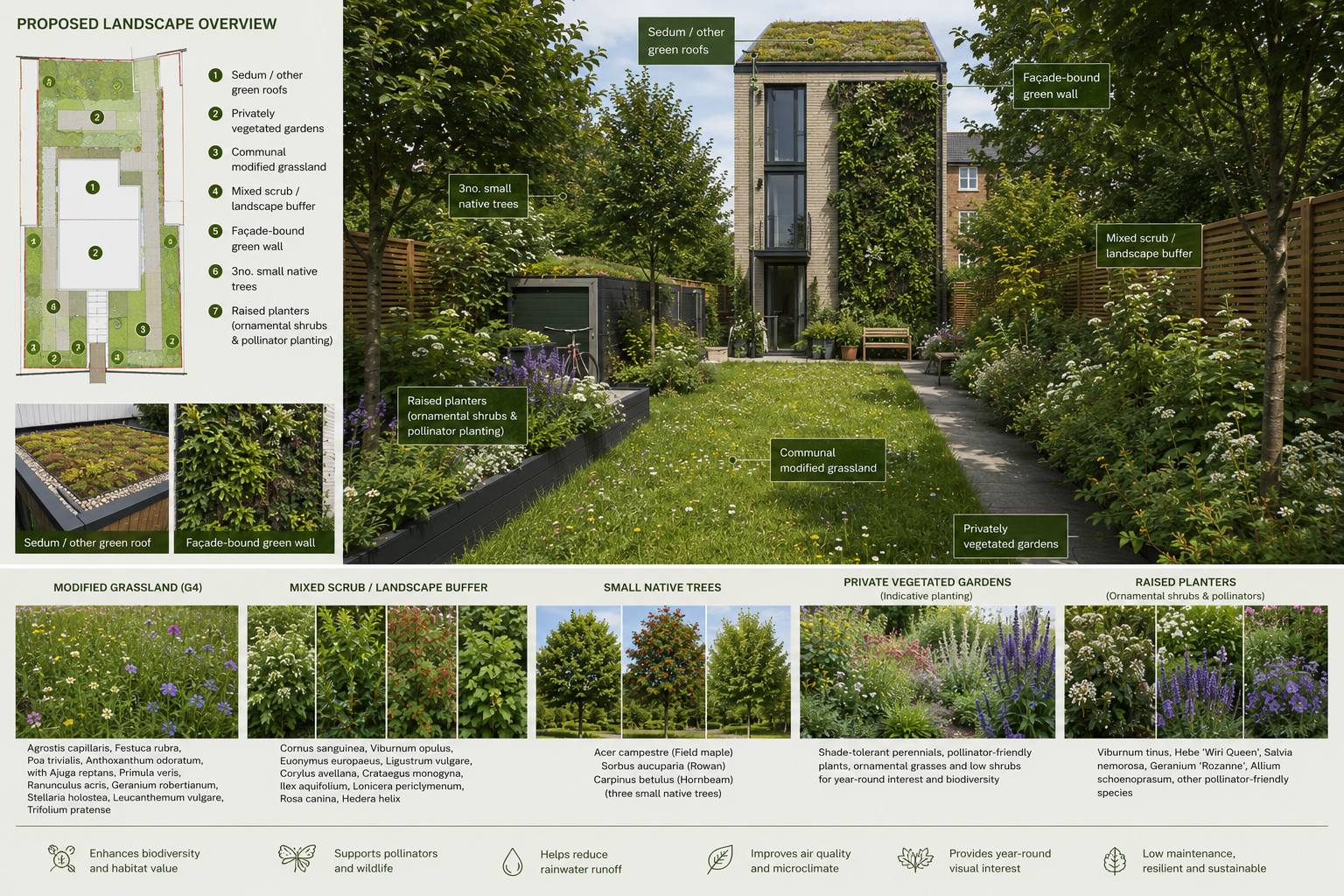
Where space is restricted, biodiversity improvements can be delivered through:
green roofs on buildings, bin stores or cycle stores;
green walls or façade planting;
native scrub or landscape buffers along boundaries;
pollinator-friendly planting;
species-rich grassland instead of standard amenity lawn;
small native trees where space allows;
integrated bird and bat features; and
insect habitat features and deadwood where appropriate.
A successful urban BNG strategy works with the site’s constraints rather than against them. Shaded areas, root protection zones and narrow boundaries can all provide opportunities for habitat creation if designed sensitively.
With the right approach, even small urban developments can contribute to nature recovery, improve visual amenity, reduce rainwater runoff and create healthier spaces for future residents.
Bee.Wise.Eco Ltd provides BNG assessments, ecological reports and urban greening advice for planning applications across the UK.